If you live in rural Western Washington and have been watching gas prices spike every time you drive through Tumwater, Tenino, or Yelm, you’ve probably wondered: Is going electric actually practical out here?
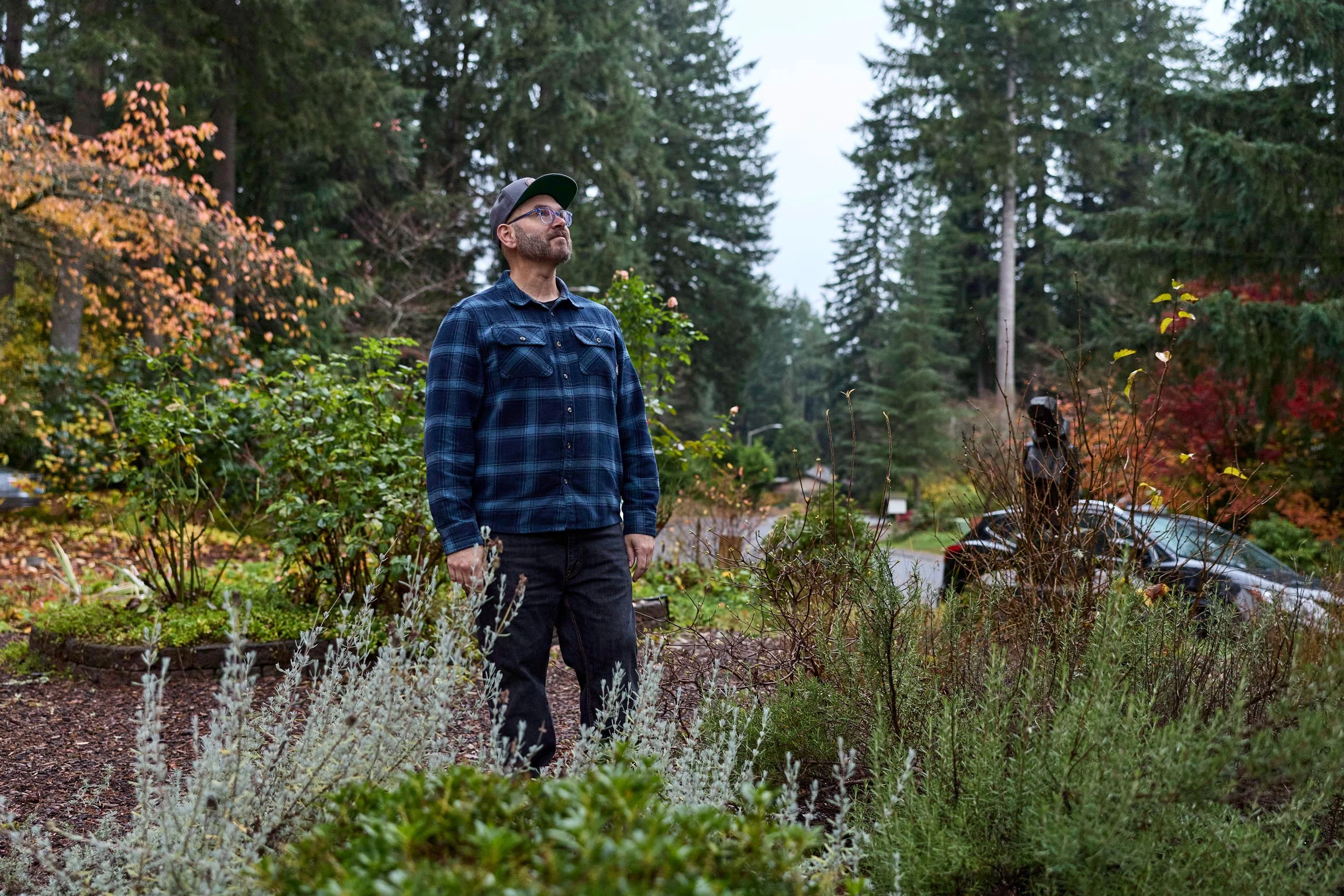
Ask Scott Clifthorne. He’s a father of three, small business owner, labor negotiator for the Washington State Nurses Association, and former Olympia School Board President. He’s also sharp with numbers. For Scott, driving electric is about pure arithmetic.
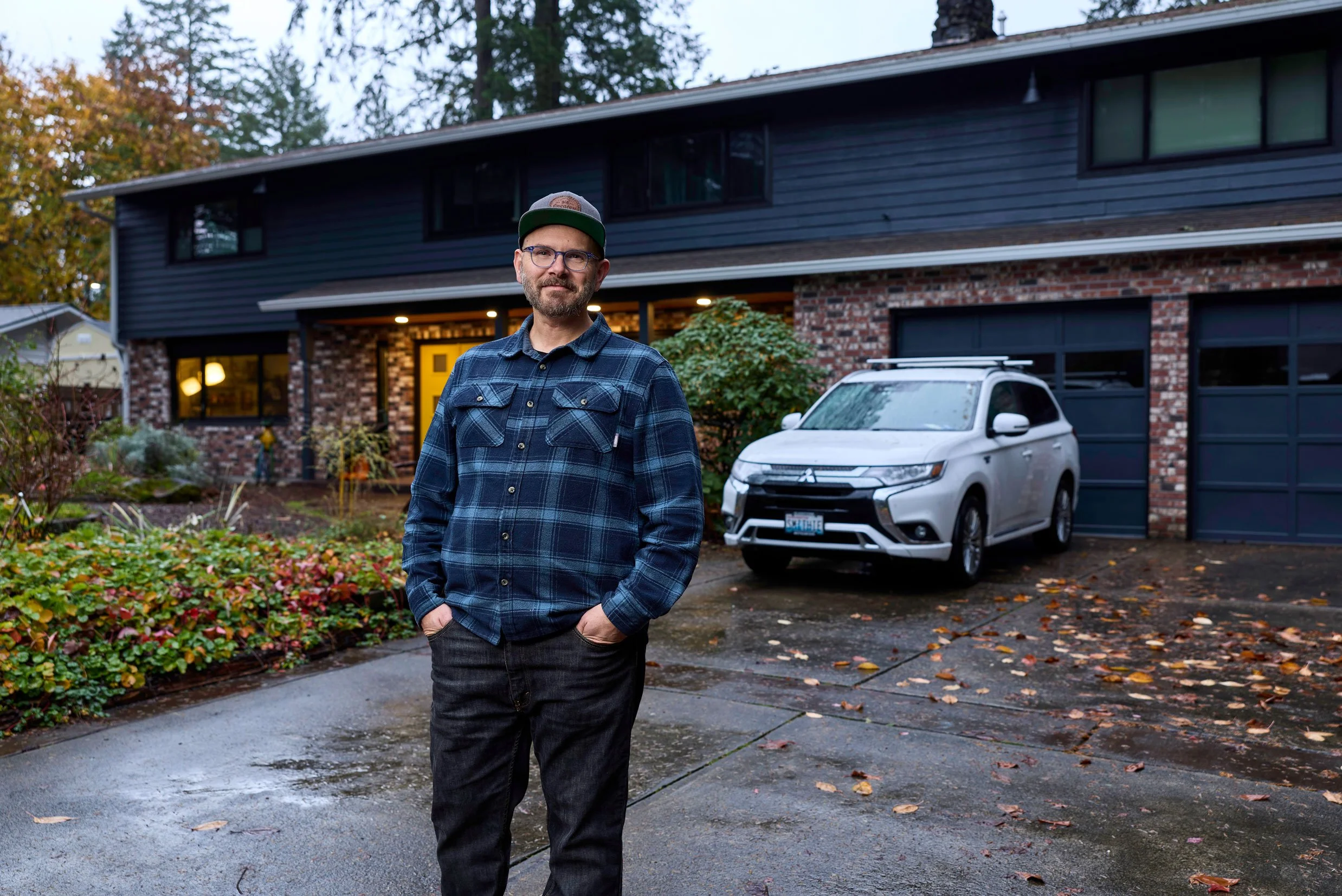
Scott’s EV journey started back in 2013, long before high-speed charging stations dotted I-5 or suburban grocery parking lots. Over the past 13 years, he’s watched EV technology evolve from a quirky alternative into a seamless, low-cost daily norm. His first EV was a 2013 Chevy Volt plug-in hybrid, which he drove over 120,000 miles before handing off the keys. Today, his family relies on a pure-electric 2023 Chevy Bolt EV for daily errands and his work travel, alongside a 2022 Mitsubishi Outlander Plug-in Hybrid EV for longer family road trips through the Cascades and down the Pacific coast.
What keeps Scott driving electric? Zero pump shock.
The math highlights a staggering financial divide over the 12,000 annual miles Scott’s family logs on the Bolt. A comparable gas-powered subcompact hatchback averaging 33 MPG would consume roughly 364 gallons of fuel. At current Olympia area gas prices averaging $5.35 per gallon, that traditional commute would cost a painful $1,945 a year. By contrast, the Chevy Bolt operates at an EPA-rated efficiency of 28 kWh per 100 miles. Powering it at home on Puget Sound Energy's residential rate of 12 cents per kWh means those exact same 12,000 miles cost just $403 a year—representing a 79% reduction in fuel spending. Furthermore, because Scott utilizes free charging at his workplace for the remaining 10% of his driving, his out-of-pocket electricity cost drops to just $363, netting him more than $1,580 in annual pocketed savings over a gas car.
And the savings aren’t the only benefit. While his neighbors wince at gas station pumps in the cold rain, Scott’s fueling routine happens while he sleeps. About 90% of his charging takes place right in his driveway, and he wakes up every morning to a "full tank,” ready to roll.
Then there are the maintenance savings. Oil changes, transmission service, and routine brake jobs have effectively vanished from his family's budget. "My Bolt uses its electric motor to slow itself down and feed energy right back into the battery," Scott notes, "and my brake pads hardly get any wear at all." Meanwhile, when it comes to performance, Scott laughs off the old "golf cart" stereotype. With instant electric torque, his compact Bolt leaves loud, rumbling trucks standing at the stoplight without breaking a sweat.
To be fair, Scott is upfront about his main road-trip friction point: public charging infrastructure. Because public networks remain fragmented, Scott currently has several charging apps on his phone to navigate payments on long trips—a process he describes as "solving an unwanted digital puzzle." On the other hand, since 90% of his driving is covered by plugging in at home overnight, he normally rarely touches a public charger anyway.
After 13 years and hundreds of thousands of miles, Scott has zero plans to ever buy a gas car again. His experience proves that switching to an EV doesn't require flipping your lifestyle upside down—just do the math, find a reputable used EV dealership, and get plugged in.