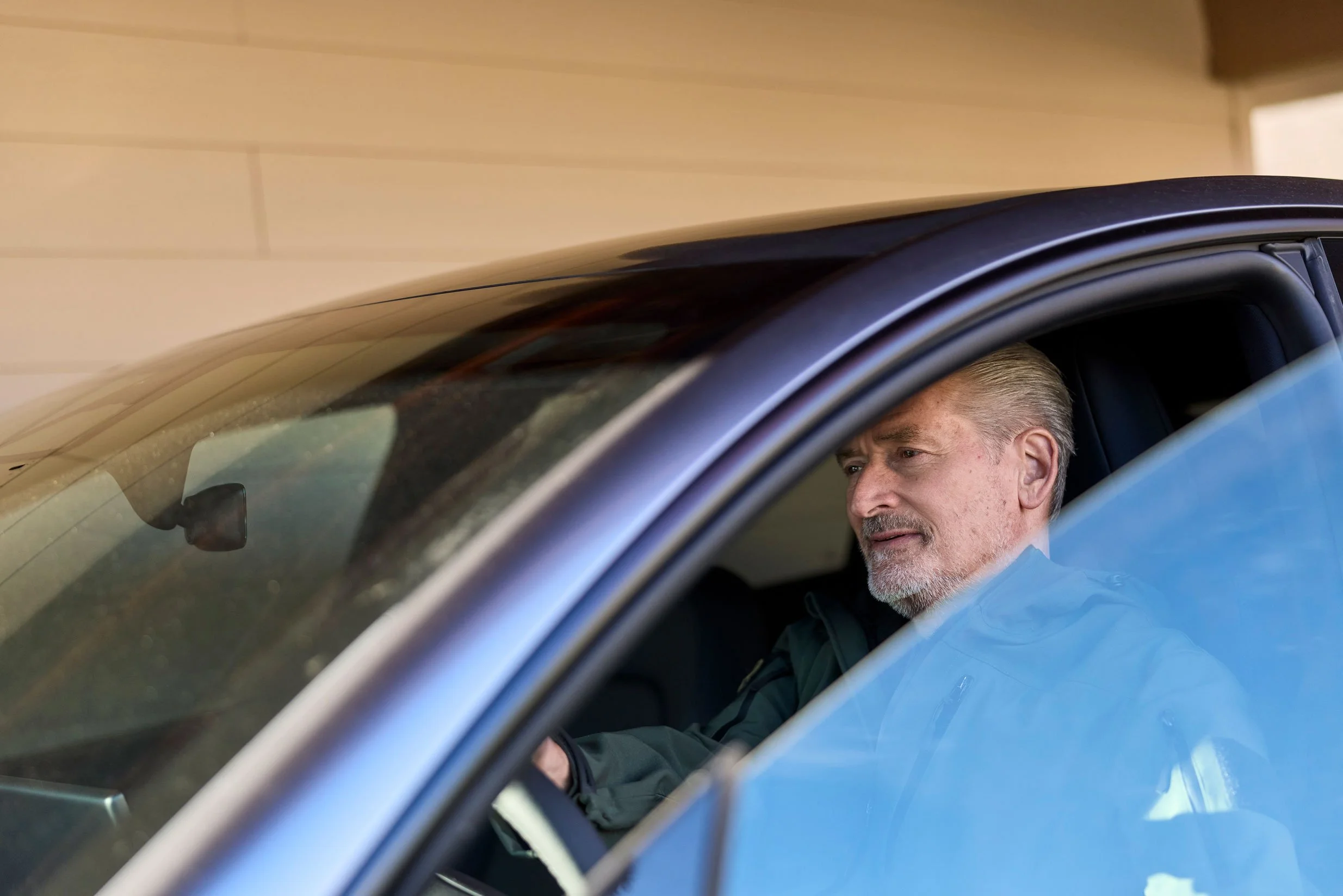
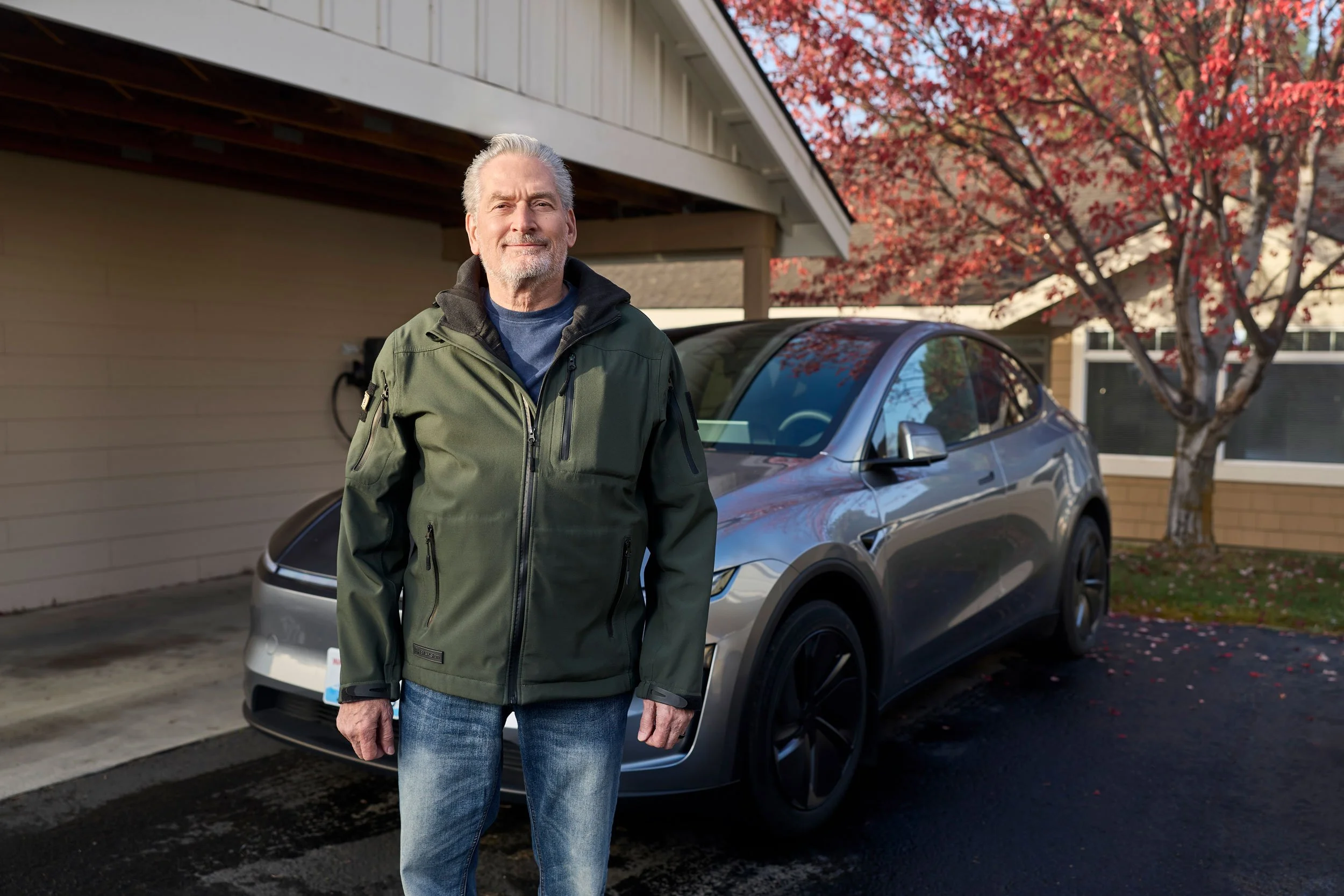
Gene Weinmann is a practical, hard-working resident of Ellensburg, Washington. After more than two decades managing housing rehabilitation programs for low-income residents in the Yakima Valley, he now works as a consultant overseeing housing rehab loans for several Yakima Valley cities. He and his wife Cindy, who is fully retired after a career in senior living and retirement communities, raised four children and now enjoy their three grandchildren. Like many retirees, Gene looks for straightforward ways to reduce unnecessary costs.
Before he ever drove an electric vehicle, Gene had been watching Tesla as an investment. He and Cindy became early stockholders, followed the company’s growth, and learned about the technology. Seeing more electric vehicles on the roads around Kittitas County eventually raised a simple question: why not put some of that interest to work in Gene’s own garage?
Earlier this year, the Weinmanns bought a silver Tesla Model Y. Their shift to driving electric in rural Central Washington turned out to be a lot simpler and more affordable than many people probably expect.
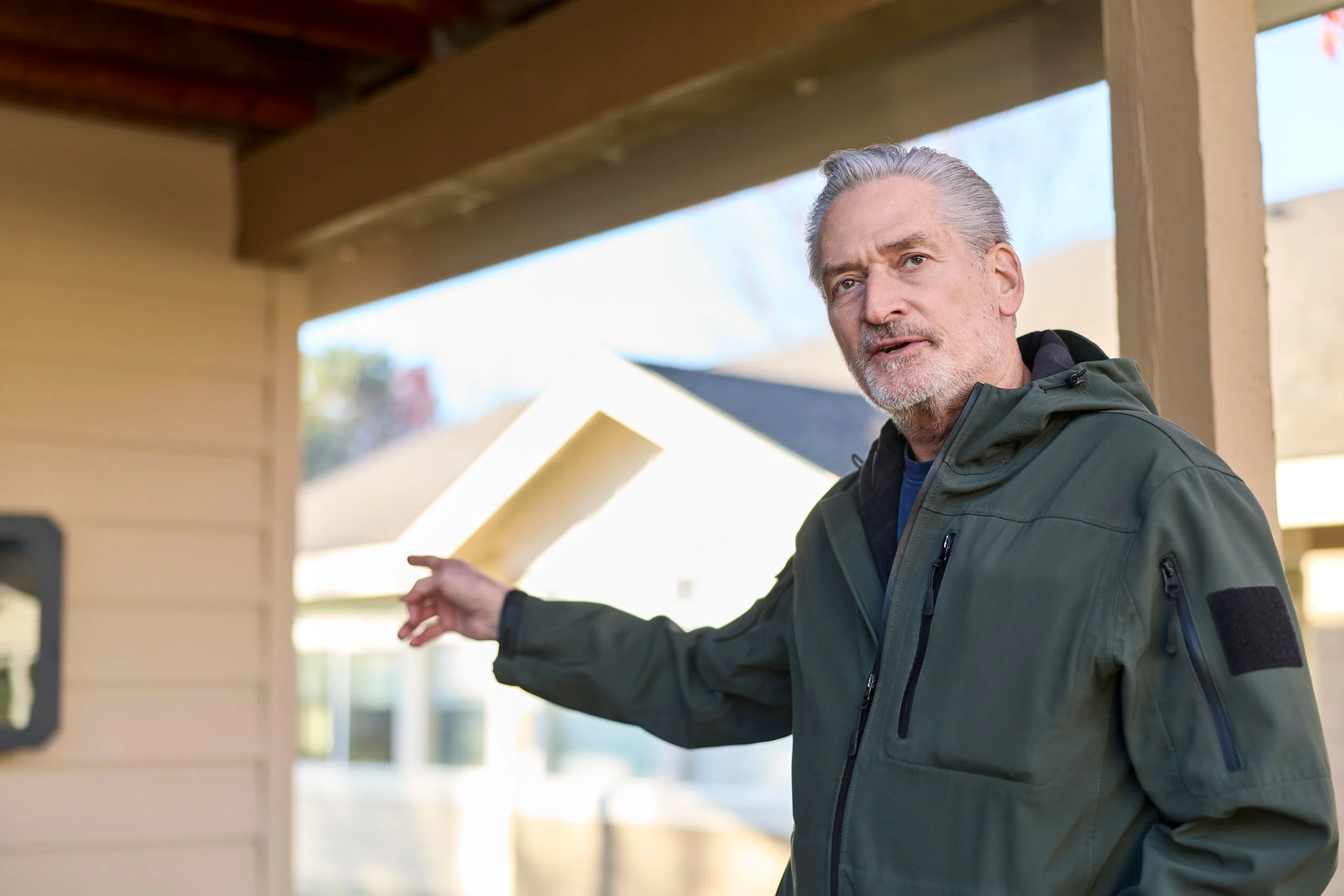
For daily driving around Ellensburg, Gene plugs the Model Y into a standard 110-volt household outlet in the garage – the same kind of outlet used for a lamp or toaster. He rarely drives more than a few miles a day for errands and appointments, so overnight charging on the ordinary wall outlet keeps the car ready. “People think you need an expensive charging setup right out of the gate,” Gene says. “For our normal routine, just plugging into a standard wall outlet while we sleep gives us all the miles we need for the next day.”
The Model Y now handles almost all of the couple’s routine trips. For heavy hauling, dirty jobs, or rough back roads, Gene keeps their 2005 Nissan Frontier. But the truck stays parked until it is needed, which saves fuel and wear while the Model Y quietly takes care of everyday driving.
When Gene needs to travel farther — across the Cascades or to other parts of the state – he uses the Tesla Supercharger network. Ellensburg has 17 stalls at two locations, and many additional Superchargers are within a one-hour drive in Cle Elum, Yakima, and the George/Wenatchee area.
The cost difference between driving his gas truck and either Supercharging or home-charging is dramatic. At $5.00 a gallon, the 15-mpg Frontier costs about $0.33 per mile. Charging his Model Y at home under Puget Sound Energy’s $0.15 per kWh rate costs only $0.04 per mile; using Superchargers, he only spends about $0.11 per mile. In other words, a 110-mile trip (e.g., to the Tri-Cities or Seattle) costs roughly $37 in the truck, $12 using Superchargers, and under $5 if he charges at home. With the Model Y’s range well over 300 miles when fully charged, the home-charged scenario is no problem.
Between lower energy costs and the absence of oil changes and other maintenance, the Model Y has dramatically reduced Gene’s day-to-day driving expenses. “We watched Tesla grow as investors,” he notes, “but driving the car every day is where the value really shows up.” For Gene and his wife, the switch to driving electric has been a straightforward and economical fit for retired life in Ellensburg.